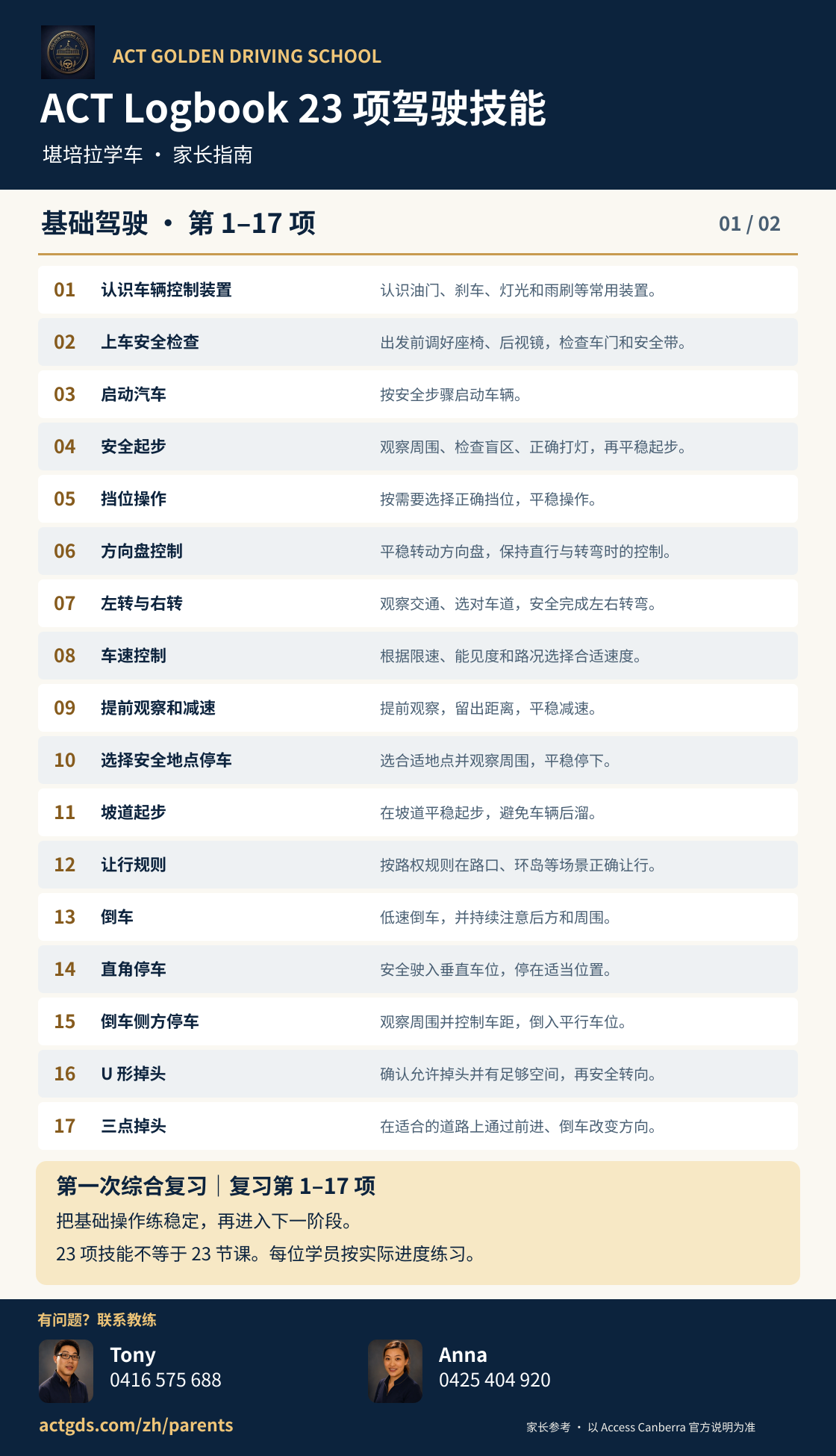
The 23 skills don’t represent 23 lessons. Some develop together, while others need more practice across several drives.
1–17 · Build the basics
- Vehicle controls
- Cabin safety check
- Starting the vehicle
- Moving off safely
- Using the gears
- Steering control
- Left and right turns
- Speed control
- Slowing down
- Stopping safely
- Hill starts
- Giving way
- Reversing
- Right-angle parking
- Reverse parallel parking
- U-turns
- Three-point turns
The first review revisits skills 1–17 before moving on.
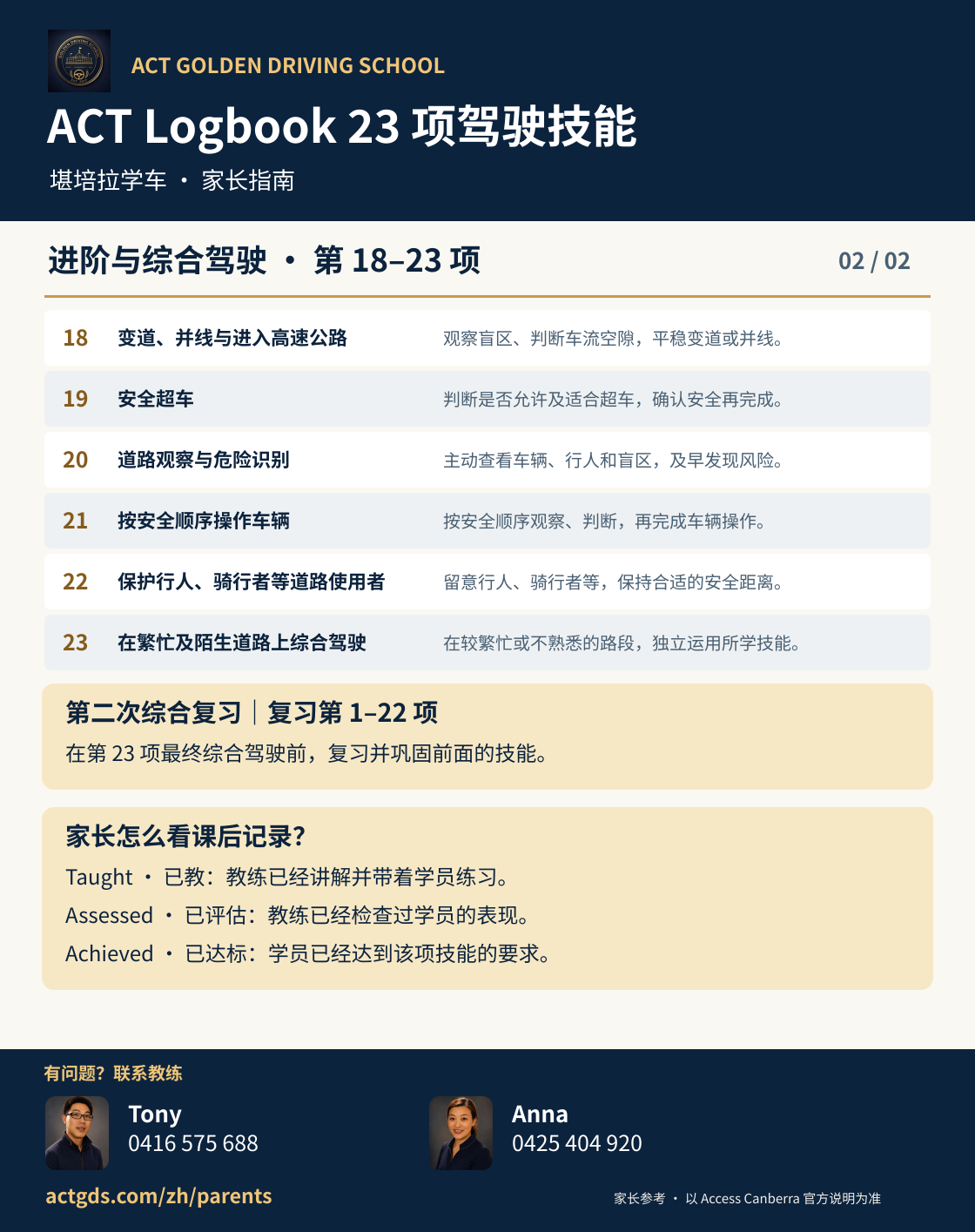
18–22 · Put the skills together
- Changing lanes, merging and entering freeways
- Overtaking
- Observation and hazard awareness
- Using a system of vehicle control
- Vulnerable road users
The second review revisits skills 1–22 before the final drive.
23 · Drive on busy and unfamiliar roads
- Driving on busy and unfamiliar roads
What the progress notes mean
- Taught — the instructor has introduced and worked on the skill.
- Assessed — the instructor has checked how the learner performs it.
- Achieved — the learner has met the required standard for that skill.
How families can help between lessons
- Agree on one thing to practise before setting off. Ask your instructor what to work on next.
- Start on a familiar route and keep instructions calm, clear and early.
- After parking, ask what went well and choose one thing to revisit next time.
Read the official ACT licence guidance